


- For regulated engineering teams
AI adoption at
full speed
Most engineering teams are at prompt-in, code-out. Spec Driven Development is a leap ahead.
Anthara takes them there. With team-wide context, governance, and the guardrails required to deliver with speed.
Works with
Claude Code
Cursor
Codex

Three things AI adoption is stuck on
Engineers have a powerful machine in their hands. Three things keep teams from making the most of it.
- There is no shared context
Standards, architecture, past decisions. Fragmented across the enterprise stack. Some in tools, most in engineers’ heads. None reach the prompt.
AI builds from what it can see. What it cannot see, it invents. Engineers correct the invention every session.
- Standards land too late
HIPAA, SOC 2, PCI-DSS. The rule lives in a doc. The code is written at the prompt. They never touch.
Policy is checked at PR review. The cost is paid. The safety net is one human, who cannot read everything.
- AI adoption is uneven
Software is a team sport. Six engineers using AI six ways add up to zero velocity at the team level.
From discovery to deployment, every team needs one shape for how AI ships. Otherwise the gain stays trapped in pockets.
Three problems.
Higher rework. Elusive productivity gains.

[THE REALITY TODAY]
Four things companies are doing today. None of it unlocks adoption.
Tooling. Upskilling. Two governance answers. Each one incomplete.
Tooling
AI coding tools in every engineer's hands. Cursor, Copilot, Claude Code, Codex. Tokens distributed, cost managed. The tools work. They do not know the team.
Upskilling
Training programs, playbooks, internal docs. Some engineers absorb, most do not. The team-level productivity gain never lands.
No formal governance
Most companies have no system. Manual PR review is the only check. The first incident is the wake-up call.
Retrofitted scanners
Snyk, Semgrep, GHAS, Wiz Code. Code scanners retrofitted for AI. They catch issues after the code is written, not at the moment of generation.
Four gaps. None of them connect.
[WHAT IT TAKES]
Adoption and governance. Solved together.
Engineers do not change how they work. The team moves faster, together.
With Anthara.
Without the trade-offs.
Same team. Same tools. Three things change.
2–3×
Productivity, team-wide.
Spec Driven Development across the SDLC. Code that aligns with regulatory and internal policies on the first pass.
2×
Fewer iterations to compliant code.
Less rework before merge. Fewer review cycles. Cleaner first drafts.
Day 1
Productive new hires.
New hires start with the team's ways of working already in context. Architecture, standards, gotchas, decisions.
AI speed lands. Without the trade-offs that usually come with it.

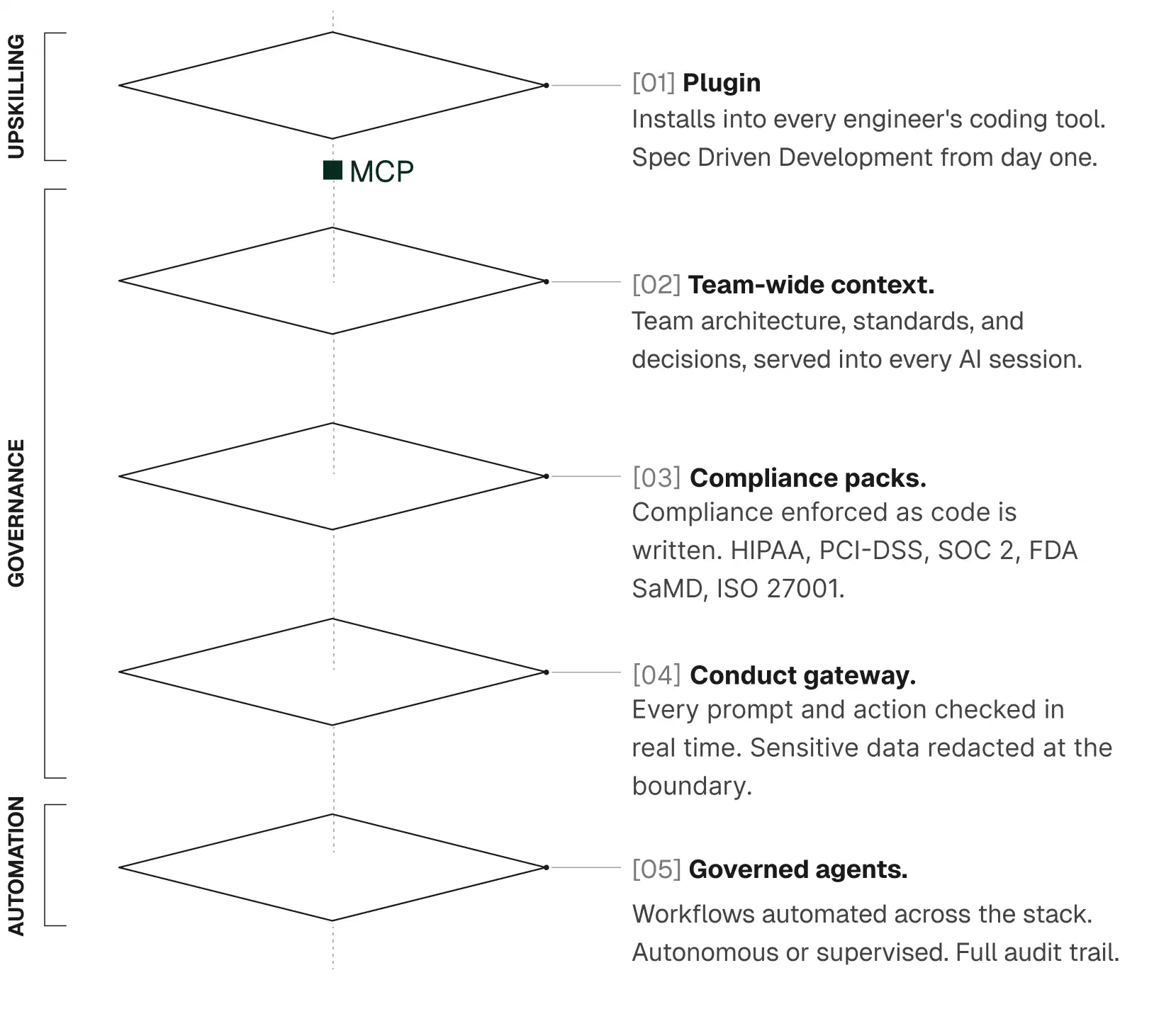
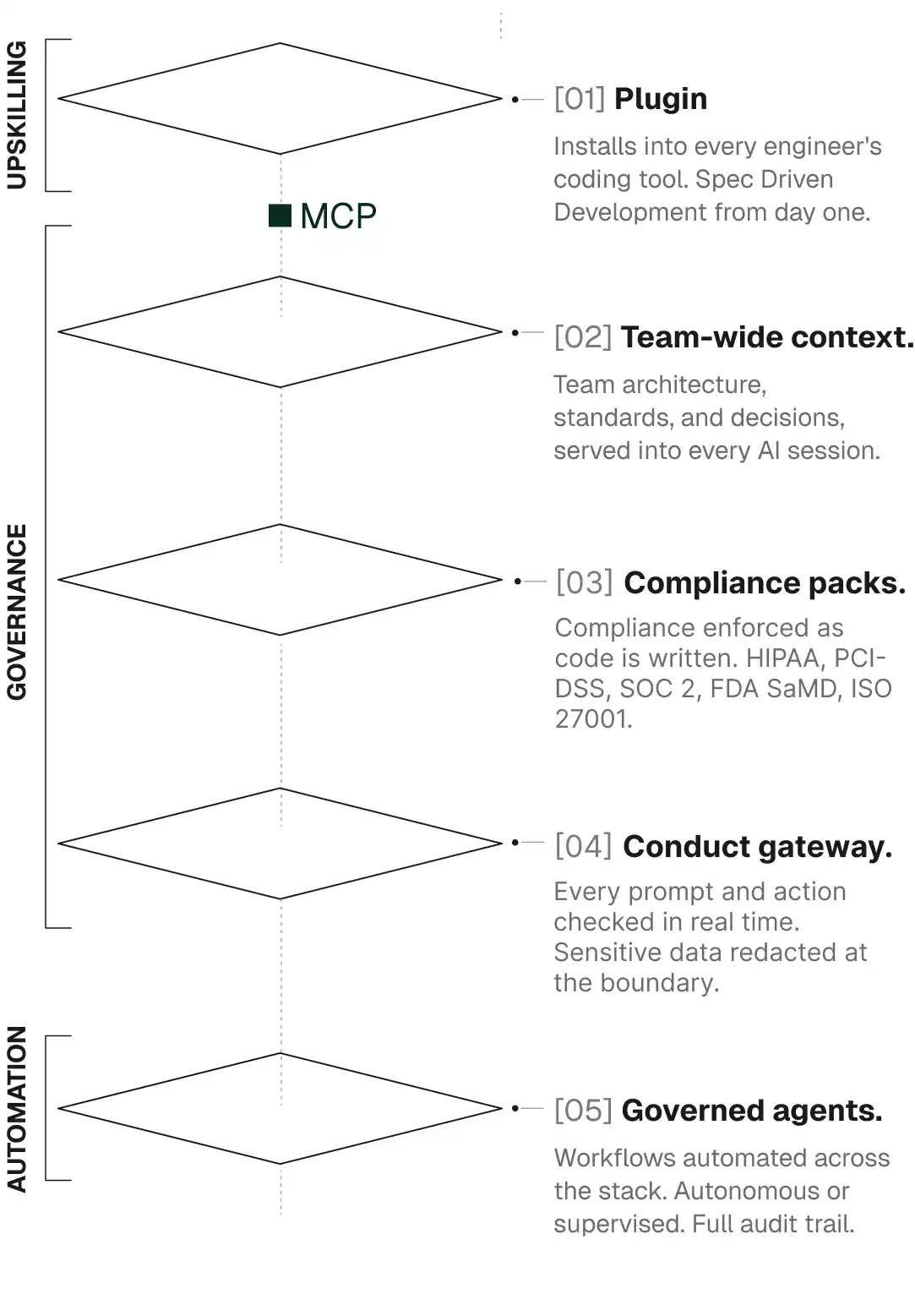
The product, in five moments
1. The plugin
The team's plugin in every engineer's coding tool. Spec Driven Development from day one. Eleven specialised agents and seventeen skills, ready out of the box.
2. Team-wide context
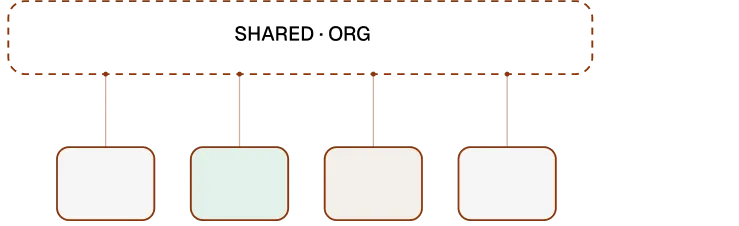
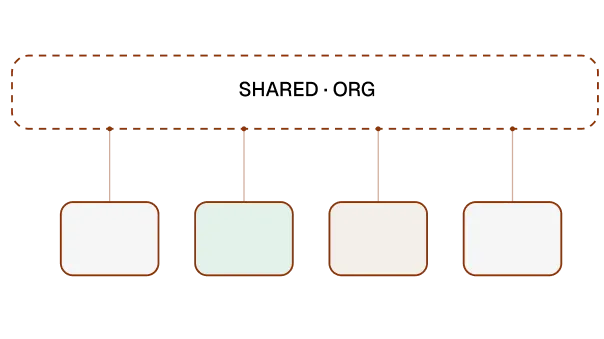
The team's knowledge served into every AI session. Architecture, standards, past decisions, gotchas, working patterns. Built up as engineers work.
3. Compliance packs
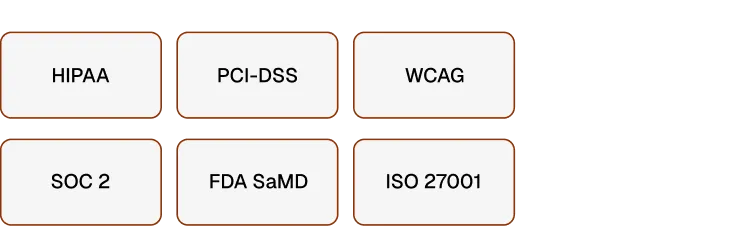
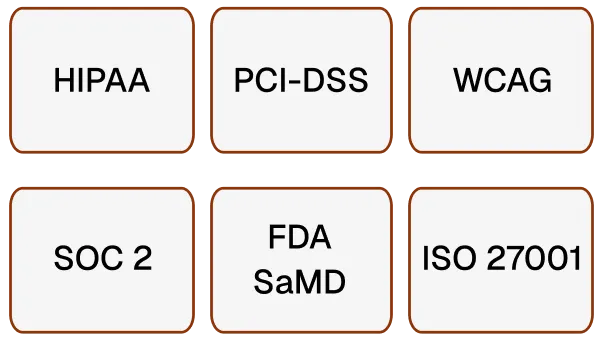
Compliance enforced as code is written, not at PR review. HIPAA, PCI-DSS, WCAG, SOC 2, FDA SaMD, ISO 27001. Or author your own.
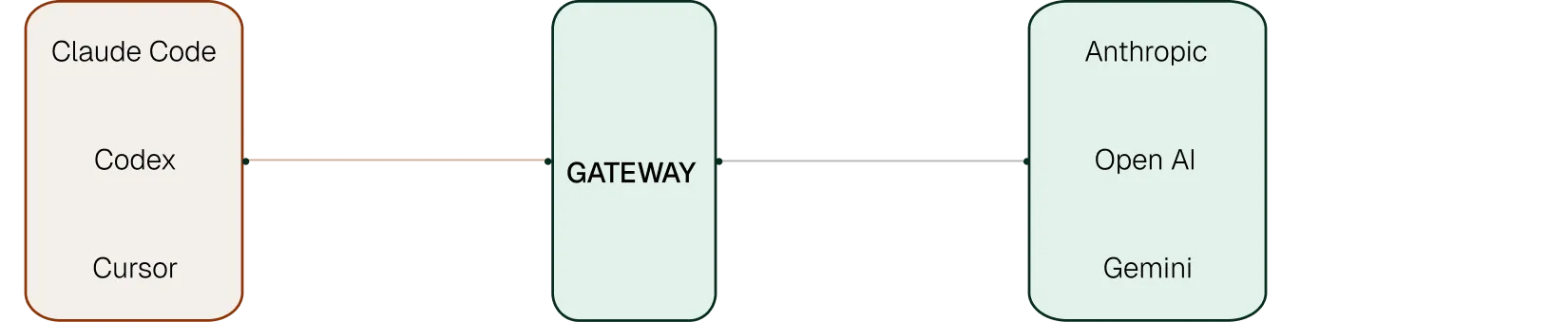
4. Gateway and tool governance
Every prompt and every agent action passes through a gateway. Sensitive data redacted before it leaves the boundary. Every tool call checked against the team's rules.

5. Governed agent automation
Automate workflows across Jira, Slack, ServiceNow, Figma, and the rest of the stack. PR reviews, Jira-to-PR, RCAs, CI/CD auto-fixes are common starters. Autonomous or supervised. Full audit trail.
The conduct layer,
up close.
Compliant by construction. Three layers between the engineering team and every AI tool. All inside the network.
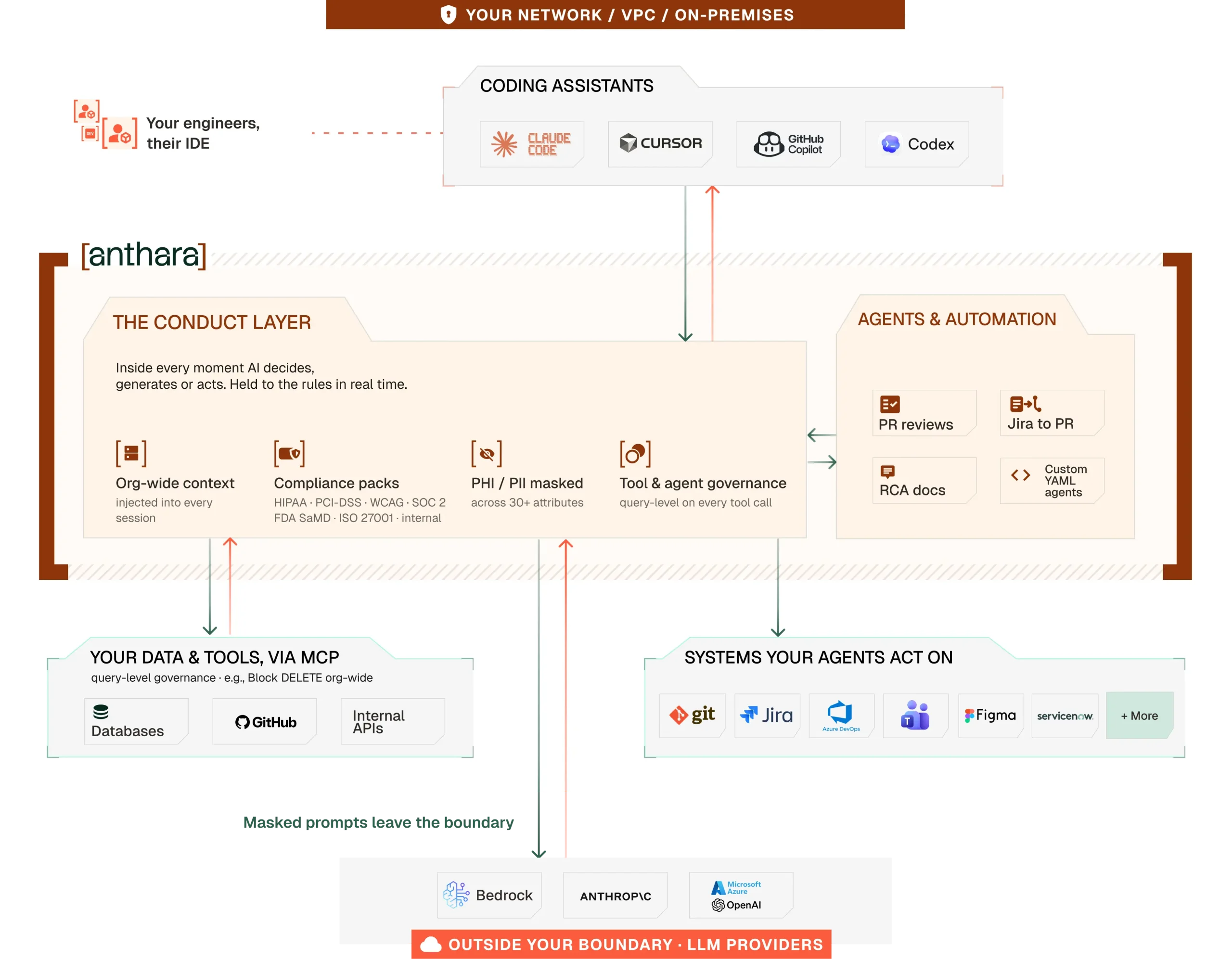
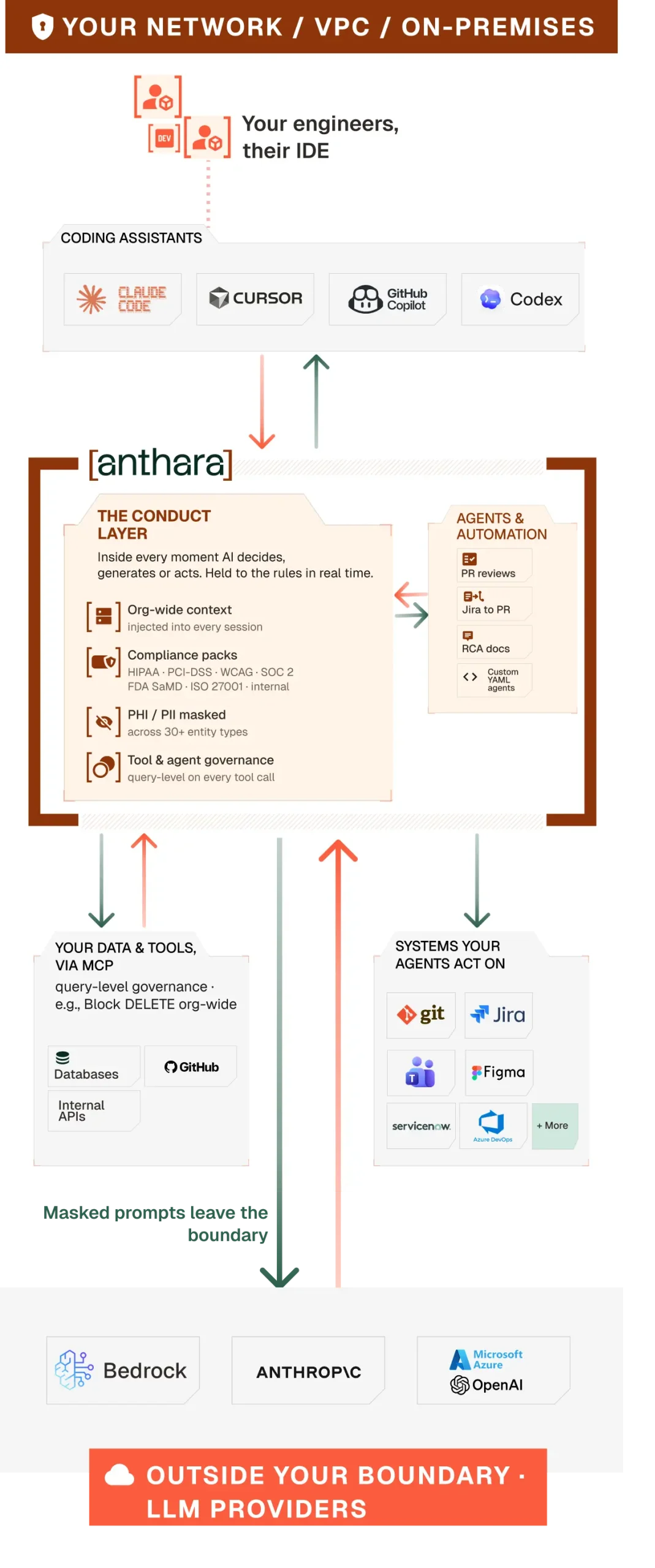
- Team-wide context
The team’s knowledge in every AI session, served over MCP.
- Policy
Compliance enforced as code is generated. HIPAA, PCI-DSS, WCAG, SOC 2, SaMD, ISO 27001. Pick what applies, or author your own.
- Gateway
Every prompt, call, and action governed in flight. PHI redacted, MCP controlled at the query level.
Built for heavily
regulated industries
Healthcare today. Fintech and insurance follow. The conduct layer carries across.
HealthTech
HIPAA and FDA SaMD packs encoded from eighteen years of US healthcare codebases. OCR-defensible audit trail by design.
FinTech
PCI-DSS, SOC 2, and GLBA enforced where AI generates code. The conduct layer calibrated for financial data and regulatory reporting.
InsurTech
State-level rules, claims data boundaries, and customer PII redaction. The conduct layer carries across state and federal frameworks.
See where AI productivity is leaking today
Common questions
Quick answers to what teams ask first.