You bought AI once.

You pay for it twice.

Once for the licenses. Again for everything they don’t cover: rework, frontier bills, compliance misses.

Anthara sits between your engineers and the AI they use. The bill drops. The code comes back right.

Works with

Claude Code

Cursor

Codex

The tools are fast.
They don't know your team.

Engineers have a powerful machine in their hands. Three things keep teams from making the most of it.

Standards, architecture, past decisions. Fragmented across the stack, most of it in engineers’ heads. None reach the prompt. AI builds from what it sees.

What it can’t see, it invents. Engineers fix the invention every session.

HIPAA, SOC 2, PCI-DSS. The rule lives in a doc. The code is written at the prompt. They never meet.

Policy gets checked at PR review, after the cost is paid, by one human who can’t read everything.

Software is a team sport. Six engineers using AI six ways add up to zero team velocity.

Every team needs one shape for how AI ships, or the gain stays trapped in pockets.

More rework. Gains that never land.

[THE THREAD]

You paid for coding.
Coding is 6% of the work.

~6%

On that sliver, AI writes blind to the team’s context, checked only at review. The rework flows into the other 94%.

Speed up the sliver and the quarter looks the same.

The bill climbs. Delivery holds still. That gap is the second bill.

[THE REALITY TODAY]

Everything you've tried fixes one gap, not the path.

Tooling. Upskilling. Two governance answers. Each one incomplete.

Tooling

AI coding tools in every hand. Cursor, Copilot, Claude Code, Codex. Tokens out, cost managed. The tools work. They don't know the team.

Upskilling

Training, playbooks, docs. Some engineers absorb it, most don't. The team-level gain never lands.

No formal governance

Most companies have no system. Manual PR review is the only check. The first incident is the wake-up call.

Retrofitted scanners

Snyk, Semgrep, GHAS, Wiz Code. Scanners retrofitted for AI. They catch issues after the code is written, not as it is generated.

None of them connect.

[WHAT IT TAKES]
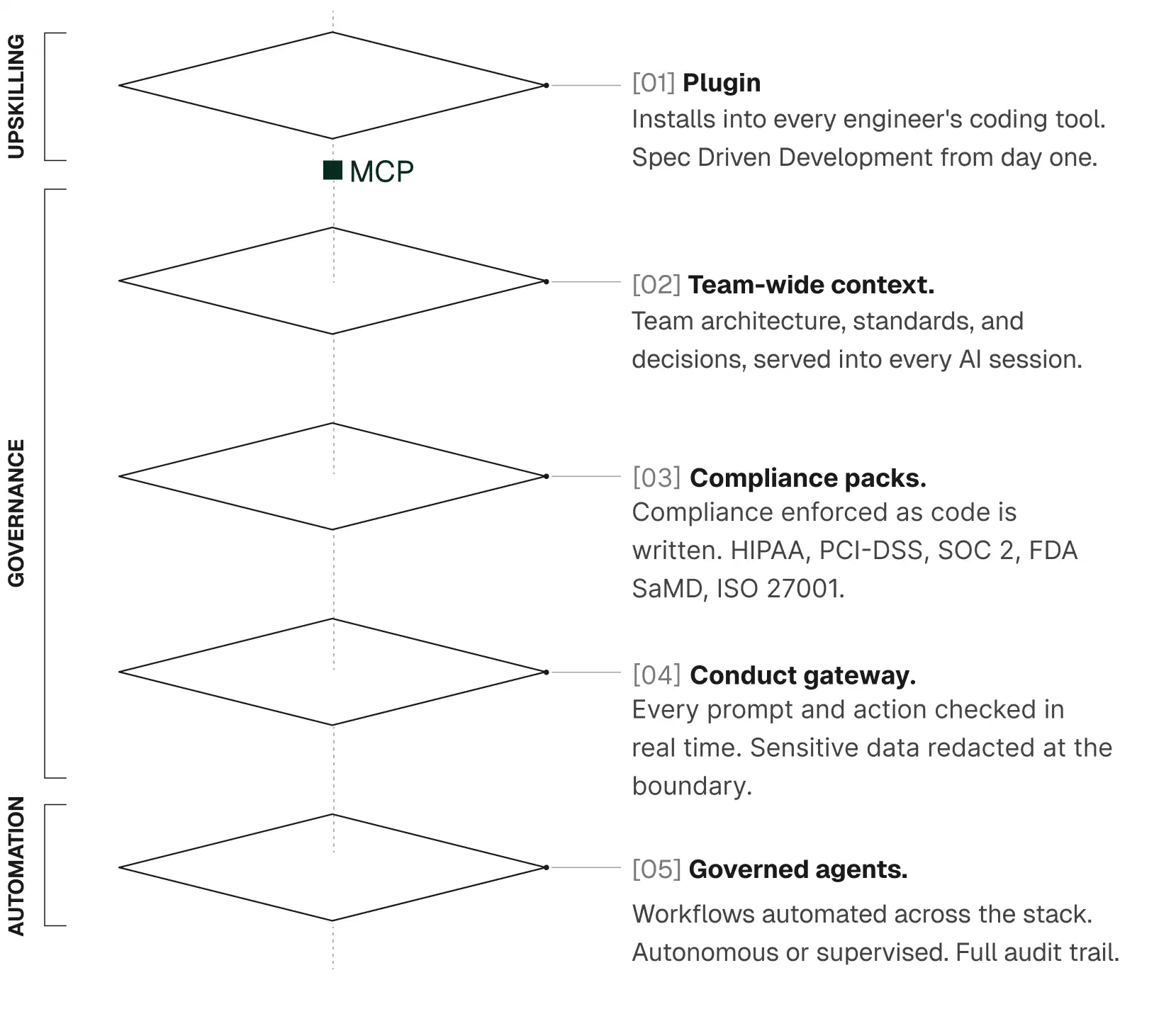
Adoption and governance. Solved together.

Diagram on what it takes for Adoption and governance getting solved together

Engineers do not change how they work. The team moves faster, together.

With Anthara.
Without the trade-offs.

Same team. Same tools.

2–3×

Productivity, team-wide.

Spec Driven Development across the SDLC. Code that meets regulatory and internal policy on the first pass.

Fewer iterations to compliant code.

Less rework before merge. Fewer review cycles. Cleaner first drafts.

Day 1

Productive new hires.

New hires start with the team's ways of working in context. Architecture, standards, gotchas, decisions.

AI speed lands. Without the trade-offs that usually come with it.

One layer, from the
IDE to production.

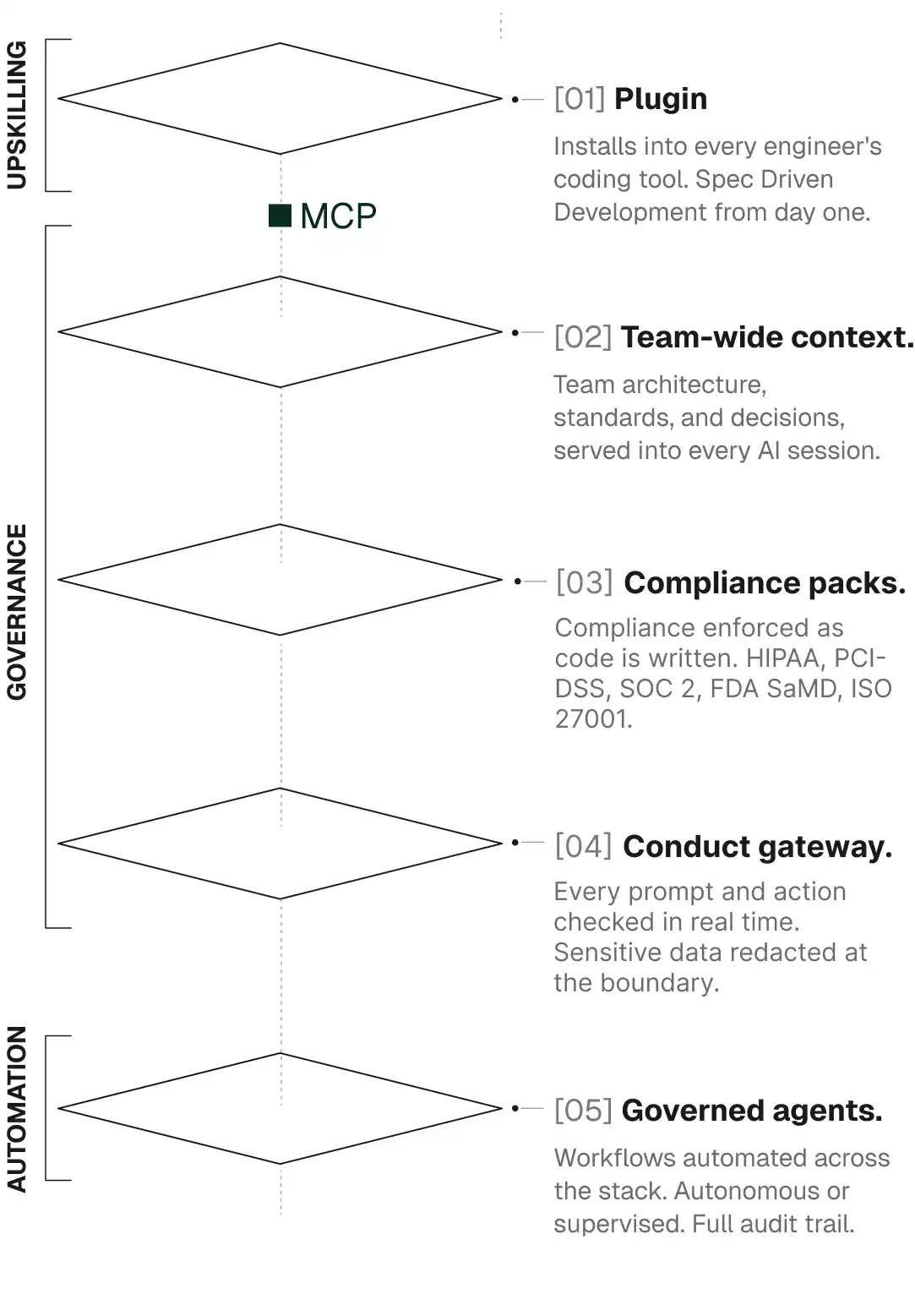
Five layers between adoption and risk. Each one configured to your team.
1. The plugin

The team's plugin in every coding tool. Spec Driven Development from day one. Eleven agents and seventeen skills, out of the box.
2. Team-wide context

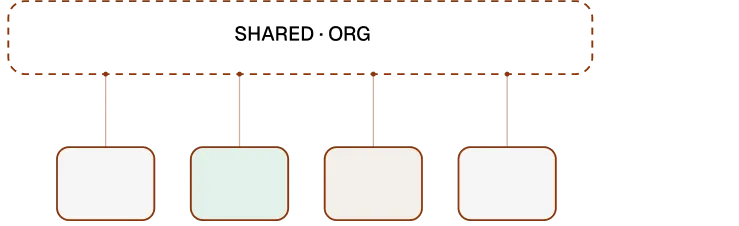
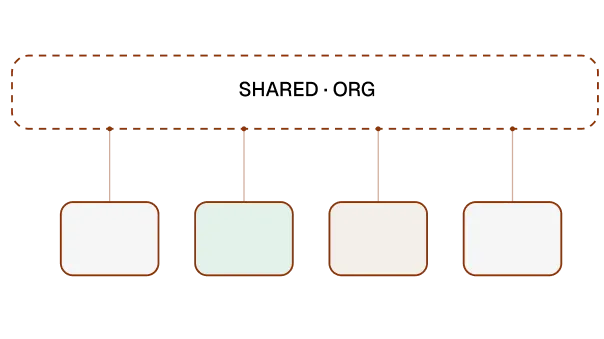
The team's knowledge in every AI session. Architecture, standards, past decisions, gotchas, patterns. Built as engineers work.
3. Compliance packs

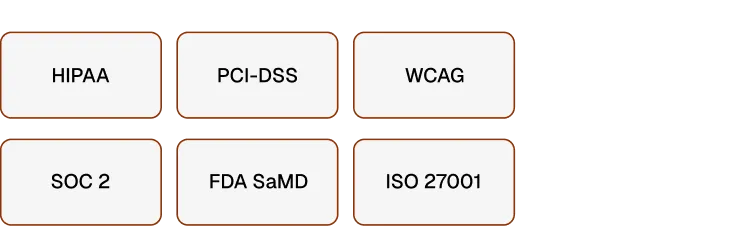
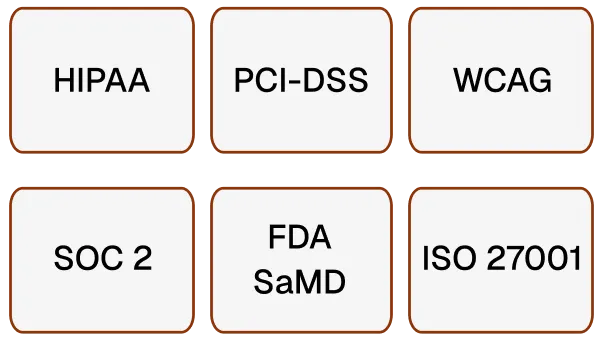
Compliance enforced as code is written, not at PR review. HIPAA, PCI-DSS, WCAG, SOC 2, FDA SaMD, ISO 27001. Or author your own.
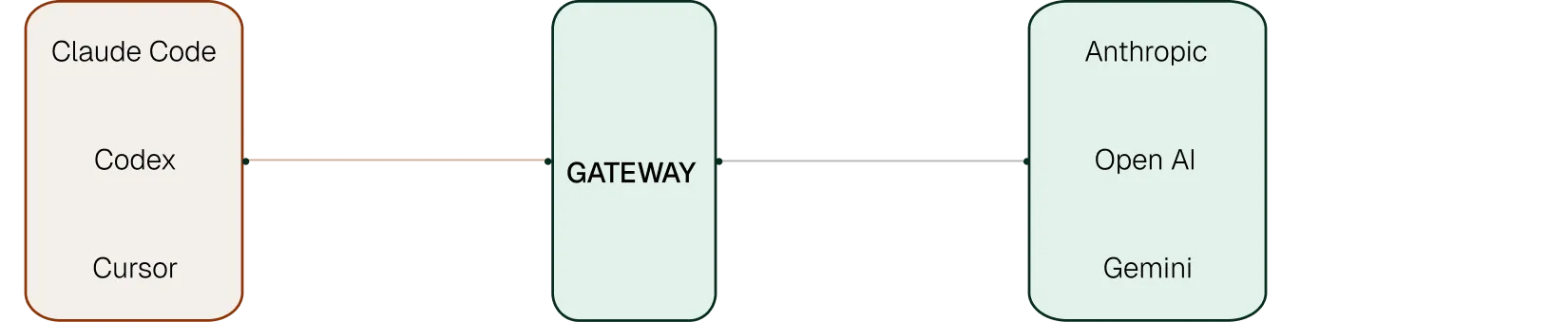
4. Gateway and tool governance

Every prompt and agent action passes through a gateway. Sensitive data redacted before it leaves the boundary. Every tool call checked against the rules.
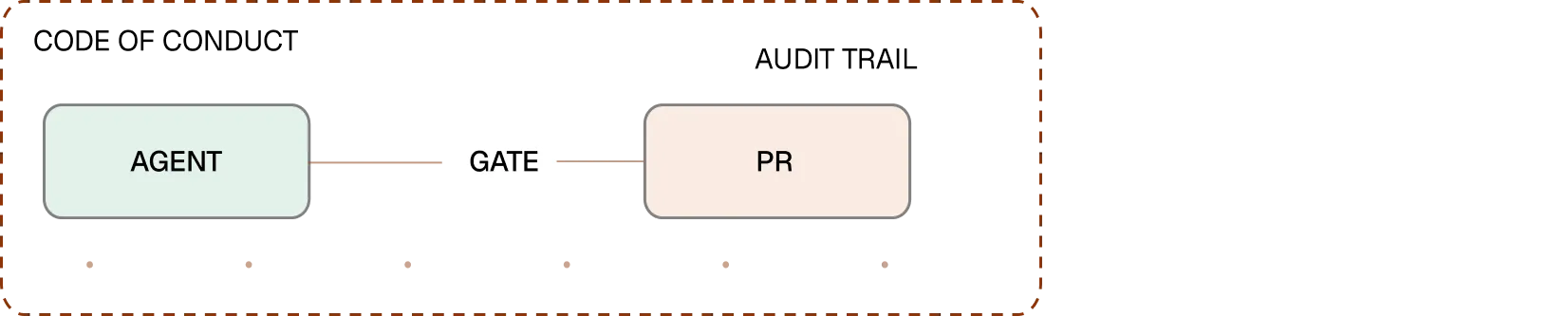
5. Governed agent automation

Automate workflows across Jira, Slack, ServiceNow, Figma, and more. PR reviews, Jira-to-PR, RCAs, CI/CD auto-fixes are common starters. Autonomous or supervised. Full audit trail.

Memory in. Policy through.
Gateway out.

Compliant by construction. Between the engineering team and every AI tool, all inside the network.
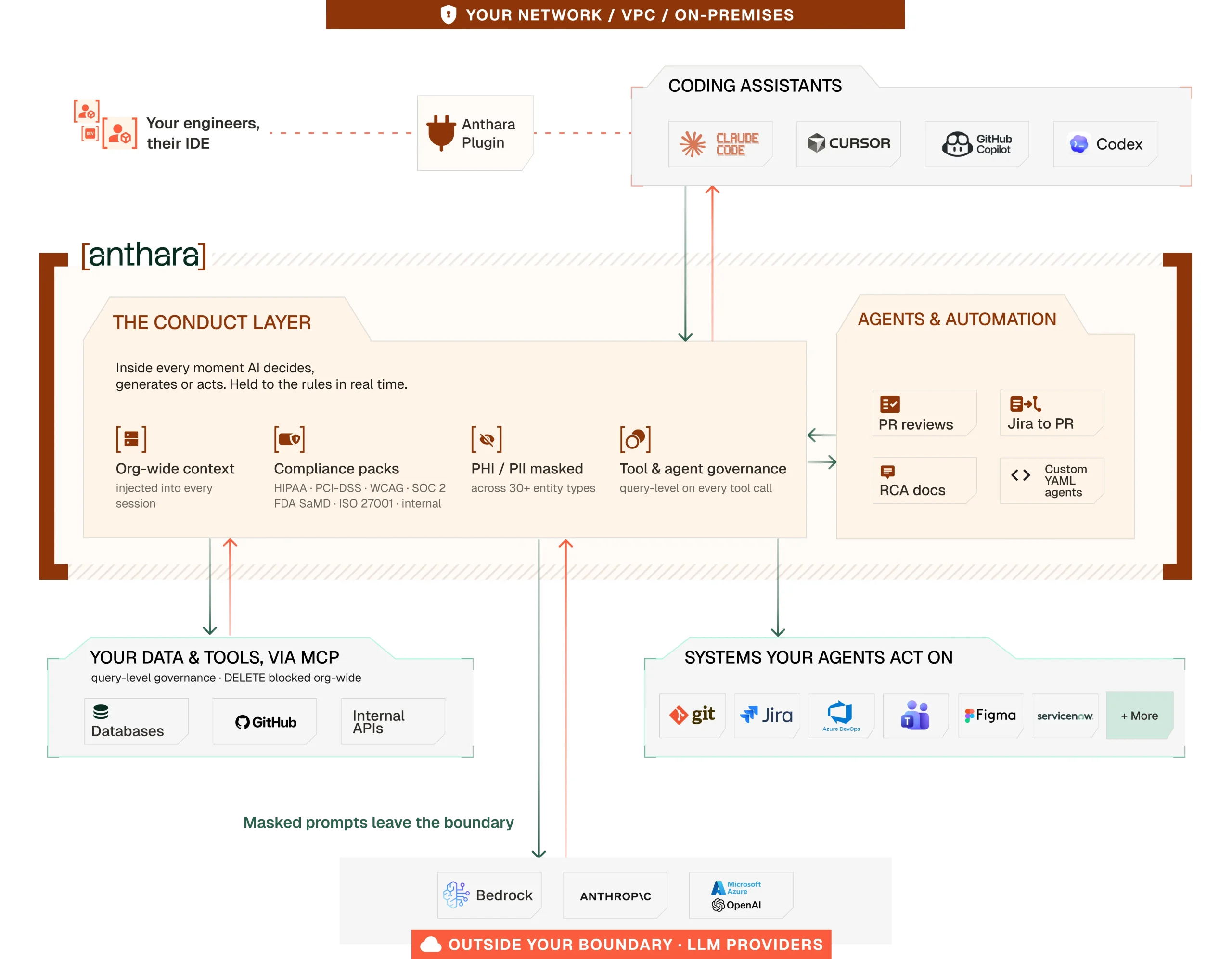
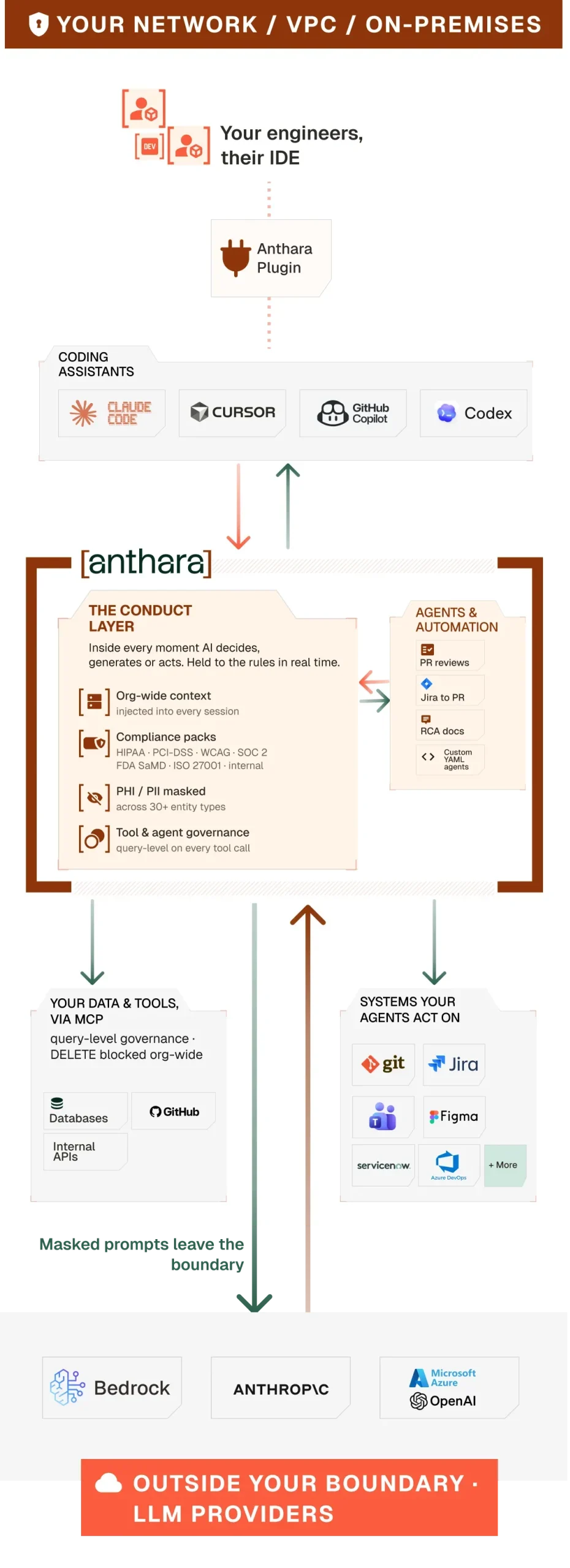
The team’s knowledge in every AI session, served over MCP.

Compliance enforced as code is generated. HIPAA, PCI-DSS, WCAG, SOC 2, SaMD, ISO 27001. Pick what applies, or author your own.

Every prompt, call, and action governed in flight. PHI redacted, MCP controlled at the query level.

Built for heavily
regulated industries

Healthcare today. Fintech and insurance follow. The conduct layer carries across.

HealthTech

HIPAA and FDA SaMD packs encoded from eighteen years of US healthcare codebases. OCR-defensible audit trail by design.

FinTech

PCI-DSS, SOC 2, and GLBA enforced where AI generates code. The conduct layer calibrated for financial data and regulatory reporting.

InsurTech

State-level rules, claims data boundaries, and customer PII redaction. The conduct layer carries across state and federal frameworks.

See where the AI budget leaks.
Free, in 48 hours.

Free Agent Experience Audit. No integration.

Common questions

Quick answers to what teams ask first.

What is Anthara?
Anthara is the AI adoption platform for regulated software teams. It puts a code of conduct in the hands of every coding agent. The team’s standards. The industry’s rules. The data boundaries. All held at the moment AI generates code. Engineers ship at full speed, and the work is right the first time.
Regulated software teams of 50 to 250 engineers in healthcare, fintech, govtech, insurtech, and any industry where compliance lives on the code, not on the name on the door. Built for CTOs and VPs of engineering who answer for safe, durable AI across the SDLC.
AI adoption moves through five stages: AI chat, coding assistants, agent mode, multi-agent orchestration, and governed automation. Revenue per engineer rises with depth. So does exposure. Most teams sit at stage two because they cannot review fast enough to safely go deeper.
Anthara’s structural claim. The conduct layer enforces the rules a team has agreed to and the standards an industry requires at the moment AI produces work. It is the infrastructure that makes deep AI adoption durable rather than risky.
Claude Code, Cursor, and Codex today. Anthara writes rule files into each tool’s native format. New tools are added as they enter the customer stack.
The plugin brings spec-driven development and the team’s standards into Claude Code, Cursor, and Codex. It stands in for a separate upskilling program, so engineers ramp faster, generated code lands closer to standard, and the team ships more without changing how it works.
HIPAA, PCI-DSS, SOC 2, FDA SaMD, WCAG, ISO 27001, FedRAMP, and GLBA. State-level packs are available for California, Texas, and Washington. Internal standards and firm-specific rules sit in a custom regex layer alongside the prepacked set.
The Anthara Gateway sits in front of every AI call. PHI and PII are detected across more than thirty attributes and redacted before any prompt or response leaves the security boundary. Mask and reject modes are configurable per policy.
MCP tool governance at the query level. The PostgreSQL example: SELECT, INSERT, and UPDATE allowed, DELETE blocked org-wide. Every action is logged. Custom agentic workflows are governed by the same policies and guardrails to allow higher levels of autonomy
On-prem or in your VPC. Single-tenant. Air-gapped deployments are supported for the most restrictive environments. Code, prompts, and sensitive data never leave the customer’s security boundary.
Yes. The deployment model keeps PHI inside the customer’s boundary, which is what makes BAA execution tractable. SOC 2 Type II is in progress.
OpenTelemetry-compatible. Every prompt, response, agent action, tool call, and policy decision is recorded with the context needed for an internal review or an external regulator.
A forty-eight hour scan of any repo. No integration. Surfaces structural risk, documentation gaps, sensitive data flow, and security blind spots. The CTO receives a depth-curve narrative. The CISO receives a BAA-ready architecture view and the on-prem evidence.
Anthara is priced per enterprise engagement, not per seat. For pricing, contact us. It is a new AI governance budget line, separate from developer productivity tools like Cursor and separate from compliance posture tools like Vanta or Drata.
A free one-month implementation service is included. Anthara engineers fine-tune the platform to internal workflows, regulatory packs, and coding standards before the team starts using it.
Scanners like Snyk, Sonar, and GitHub Advanced Security verify code after it has been written. Anthara governs while it is being written. Anthara extends scanner coverage rather than replacing it. The same applies for SAST, DAST, and AppSec tools already in the stack. Scanners also add iterations that slow the release cycle. Anthara needs fewer iterations, which means lower cost and faster releases.
Compliance posture tools like Vanta and Drata prepare for audit by tracking controls and evidence. Anthara enforces in real time at the point AI produces work. Posture proves a control exists. Anthara is the control on the AI path.
LLM runtime security protects the model boundary against prompt injection and jailbreaks. Anthara governs what agents and assistants produce inside the codebase, with regulatory packs, org-wide context, and a full audit trail. Different layer, complementary scope.